My first memory of Sushi comes from a field trip I took in grade school. Growing up in a small town in the 80s, the only foods I had experienced to this point came with a side of fries or mashed potatoes.
During lunch on our field trip, a young exchange student sat next to me and pulled out a beautiful little bento box. I had seen sushi on TV but I didn’t really know what it was all about. I still remember the bright green wasabi and the pink tuna rolls and strips of Salmon as he pulled out some chopsticks and began to eat. It seemed so much more elegant than my brown paper sack with the smashed PBJ that I sat on during the morning school bus ride.
While that memory stands out as my introduction to Sushi…It wasn’t until later that I really began to fall in love with Sushi.
Which brings me to today where I am sitting at one of my favorite Sushi bars here in Seattle. Located in the heart of the West Seattle Junction is a little sustainable sushi house that is creating a huge impact…
This is “Mashiko”…
WST: Hello again… Thanks for your time, can you introduce yourself and tell me a little about how you ended up here at Mashiko?
Allison: Sure! Well, I’m Allison Hill and I’m one of the owners here at Mashiko…
When I was 17 I moved to Japan for a little while. I had always been a little obsessed with Japanese culture, being immersed in it growing up in Maui, and was excited to experience it first hand. However, due to the fact that I was too young to get a work visa, I eventually ran out of money and returned to the states.
WST: Is that what sparked your love of Japan?
Allison: I mean, I definitely missed Japan. It might sound kind of funny but I get “homesick” for my time In Japan… A lot of that has to do with the food. Eating japanese food connects me with what feels like home.
WST: And how did you end up at Mashiko
Allison: I had restaurant experience and had to find a second job. I ran into some friends in the junction and they asked if I would be interested in being a server.
I was hesitant at first because nearly all of my experience was back-of-house, but…obviously, here we are!
WST: Tell me about when you fell in love with Mashiko?
Allison: There’s a number of reasons I love it here so much. One of the things I really liked most about Mashiko, was the original founder wanted this place to be where people could learn about (and celebrate) a more traditional experience when it came to sushi. You know…None of the cream cheese and smoked salmon what not.
[both of laugh]
Mashiko has always had a lot of heart behind it. That is something I personally love.
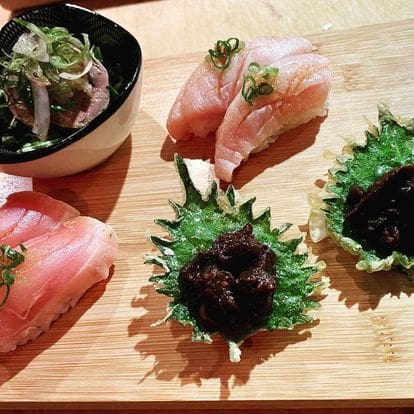
Another reason I love Mashiko (and I feel that I can say this without shame because I am not one of the chefs), the food is so good it is ridiculous!
Mariahsan and Brandonsan are out of control with their creativity. They build flavor profiles that you never think would work together until you’re sitting there with your mind blown because you just tasted your new favorite thing. For example, a few years back they combined blue cheese in a roll and It was just the best thing ever. Everyone loved it!
The creative freedom we have here at Mashiko, is something that just makes the job so much fun to be a part of.
Of course, I also have to mention the sustainability aspect of our restaurant because that is what really brought us all in, and made us fight to keep the restaurant going.
All three of us (Brandon, Mariah, and myself), are huge proponents of the eco conscious and earth friendly movement when it comes to our restaurant. Sustainability is such a big part of what Mashiko and our lives are and we all really believe in it.
WST: I don’t think people realize how hard it is to be a sustainable sushi restaurant. What do you want your customers to know about your commitments on sustainability?
Allison: The word “sustainable” itself is just so broad. Really, we mean that we are continuing forward with the original idea of 2009 and just expanding on that..
I don’t think most people understand how over-fished and contaminated our oceans are. We’ve been draining our ocean resources for far too long and the impact is devastating. It would be great if my niblings could visit me at the restaurant when they are older and still be able to try some of the same sushi I grew up with. Right now, unfortunately, It’s not hard to imagine a world where a lot of commonly loved dishes are no longer available due to endangerment or extinction.
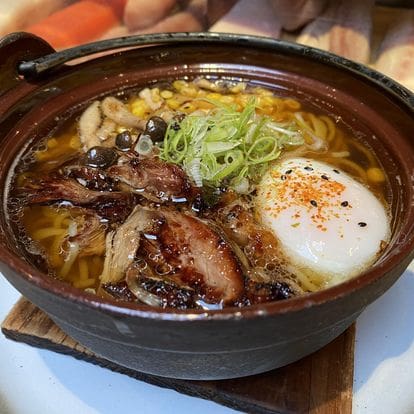
That being said, the challenges of sustainability also brings with it opportunities. For example, the popularity of Unagi (a critically endangered freshwater eel) means that it continues to be served.
In place of Unagi, we work with a beautifully sustainable option in the form of an eco farmed catfish that, When prepared correctly, mimics the flavor and texture to the point of being nearly identical. We create the Unagi sauce from black cod bones and It really is something. All the flavor and none of the guilt.
By using more sustainable alternatives we also introduce our customers to new flavors and contribute to our sustainability goals.
WST: I would imagine that this means you are focusing a lot more on local and seasonal items.
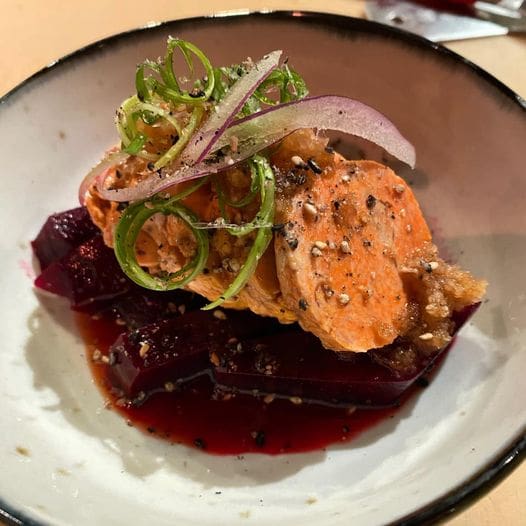
Allison: Oh my god, yes! So we started doing micro seasonal and that means our menu can change daily. This time of year, we see a lot of changes. We love the challenge of an evolving menu and our customers love how we incorporate seasonal vegetables, fruits, funghi, berries, etc., into our menus
WST: How do you come up with menus?
Allison: So there’s about 80 years of industry experience between Brandon, Mariah, and myself, and we are really hands on when it comes to knowing where our food is from. People might not realize that part of being a sustainable restaurant also means that we have to consider our carbon footprint. This means we aren’t going to be flying in seafood from outside locations every day.
HOWEVER….since we are blessed to be living in the bountiful Pacific Northwest, we have the ability to work with reservations and smaller local fisheries. This has allowed us to develop trust and transparency when it comes to where we get our product. It allows us to say with confidence that we work with companies that share our sustainable commitment. It also means we can proudly support our local community.
WST: Let’s talk about “omakase”. I didn’t really know what it was until I came to Mashiko and had my very first experience with it. For me, It was a game changer.
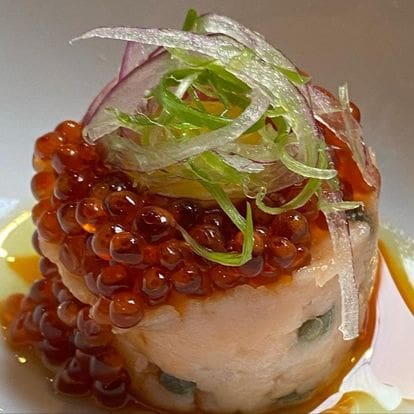
Allison: The phrase omakase, literally means “I leave it up to you”, and when someone orders an omakase, they are trusting us to provide a flavorful experience for them.
An Omakase [ˌOH-maw-kaw-say] is a traditional way of eating. Our menu offers several omakase dinner options. It is important to note that an omakase will take around two hours or more so you have to be prepared to be here for a bit. You’re going to have up to 20 or 30 minute breaks in between each course. It is designed to allow you the opportunity to experience new flavors, enjoy your meal and spend time with your company appreciating everything that you’re consuming. It might sound a little cheesy, but it is like a journey and we are on the trip with you. It involves trust and understanding between us and our guests.
At Mashiko, we want you to have the best experience possible so when you order an Omakase, we come out to your table and ask you to share with us your likes and dislikes. We listen to what you have to say and then create a meal around your interests.
I personally love this way of eating! When I’m hungry, I don’t want to look at a menu… I want the chef to tell me what they would order, because they’re the one most familiar with the menu and fresh sheets.
The real brilliance of our chef’s skill is highlighted during an omakase. Each experience is customized to the individual guest. With an Omakase we aren’t just serving food, we are creating an eating experience. And, now that Mashiko has been around for nearly 30 years, our chefs have the reputation and skill that give our customers so much confidence.
WST: So how does one train to reach that kind of skill level?
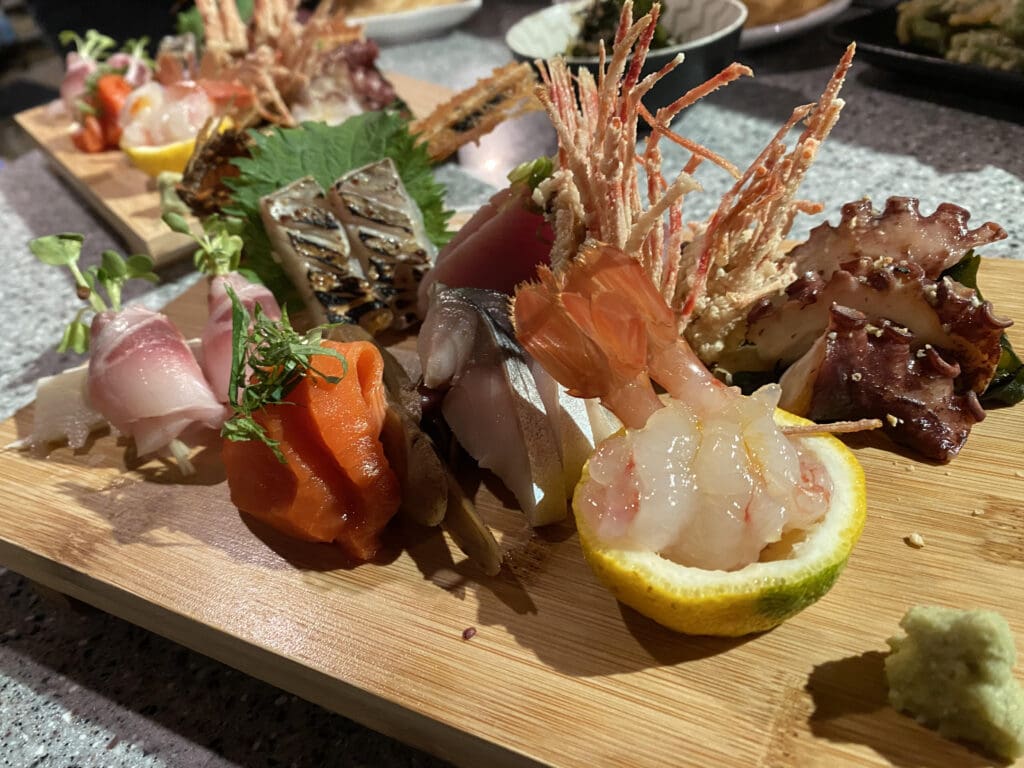
Allison: We actually have a couple people that just started training to become sushi chefs. It’s not something I feel that I could do…It really takes years to master. It is, however, fun for me to watch the process as they develop their knife skills.
Training starts as you would expect. Everyone works their way up from the beginning. They start with the smaller stuff like kitchen prep, tempura, and that sort. They must master all of the so-called “monotonous”, or “boring” elements of the job that are both necessary (and required), in order to build the foundation for the final steps.
Cutting the fish is the last step of the process that you learn. The earlier steps teach you how to master your precision through repetition so that you are ready to take on a giant fish.
Mariah and Brandon can break a fish like that down so quickly. It is like watching an artist paint…such precision and skill. It can be quite intense and I find it to be very exciting to watch.
WST: I too love watching master craftsmen do what they are good at.
Well, that brings us to the end. Thank you so much for your time and for sharing. It’s always fun to come visit you and Mashiko.